

There’s a version of the wildlife garden that puts a lot of people off. You’ve probably seen it – the long, uncut grass, the slightly apologetic log pile, the bird feeders on poles above a muddy patch where a lawn used to be. It looks more like a garden that happened than one that was made, and if that’s your mental image of wildlife-friendly design, it’s understandable that you’d rather not go there.
But that image has very little to do with good design.
If you get the design right, a garden that’s rich in wildlife looks, almost without exception, beautiful.
Rewilding is often misunderstood
People sometimes think of creating a wildlife garden as “rewilding”. However, true rewilding is a land management strategy – removing large scale human intervention like agriculture or forestry to allow ecosystems to recover. It’s what’s happening on former farmland at Knepp, West Sussex, and across parts of Scotland. That’s not what we do in a residential garden.
To achieve that wild, abundant look in a designed garden we use naturalistic planting – and that’s a professional design discipline with deep roots. Piet Oudolf has been doing this for decades. His planting scheme at Trentham Gardens in Staffordshire – vast drifts of grasses and perennials, soft and structural at once – is one of the finest examples in the UK. Beth Chatto built her entire reputation on working with what a site naturally offers rather than fighting it. Vita Sackville-West at Sissinghurst was doing something similar in spirit, even within a formally structured garden: planting in generous, naturalistic abundance within a clear architectural frame.
None of these gardens look unkempt. All of them support extraordinary levels of wildlife. When a planting scheme is designed around what plants naturally want to do, that tends to be the result.
Structure comes first
Whatever the brief, the starting point for every garden we design is the same: what are the bones? The levels, the boundaries, the paths, the hard surfaces, seating, storage – these are resolved before a single plant goes in. This holds whether the brief is formal, contemporary, cottage-style or wildlife-centric. The planting comes after the structure, and it works within it.
Structure is what separates a naturalistic planting scheme from something that just looks unloved. A clear path gives the eye somewhere to go. Defined edges make loose planting read as deliberate rather than drifting. A well-placed seating area tells you, immediately, that someone has designed the space. Once those elements are in place, the naturalistic planting – however freely it grows – looks chosen rather than accidental.
We designed a garden (pictured above) in Rickmansworth, Hertfordshire, for a client who is a committed naturalist: a keen birdwatcher, butterfly enthusiast and volunteer at a local nature reserve. His brief was very clear – he wanted to bring as much wildlife into his small town garden as possible.
Our starting point was exactly the same as for any other project: a path through the garden, a seating area and shed storage. Structure first. Then we added a natural pond and planted throughout with wildlife-friendly species. The result is a garden that’s teeming with life.
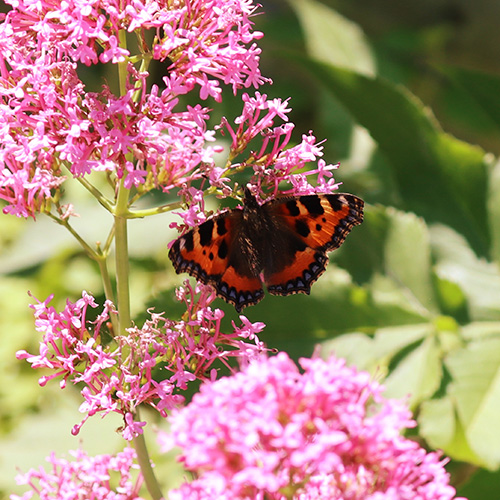
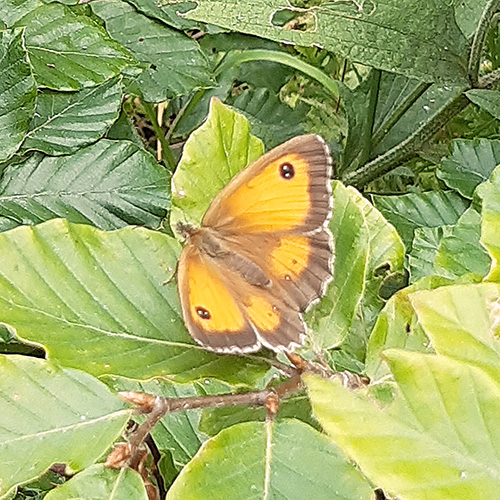
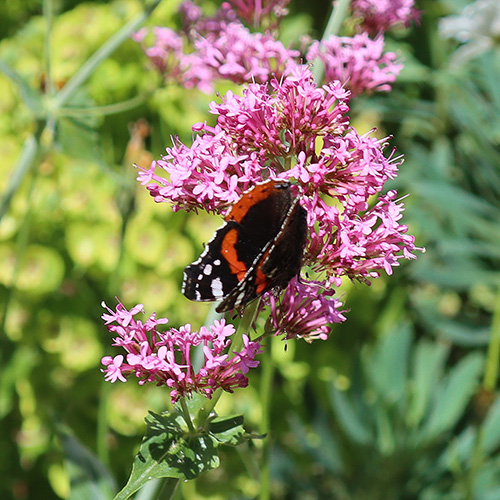
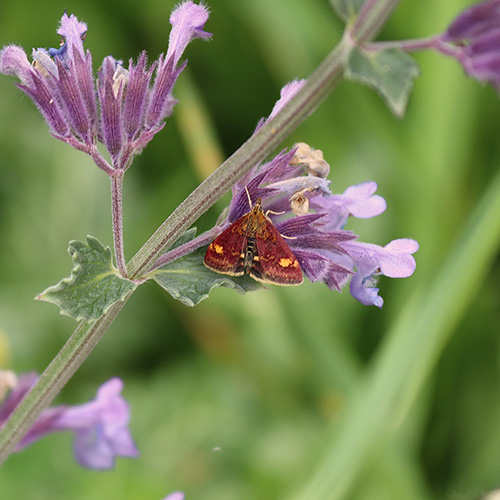
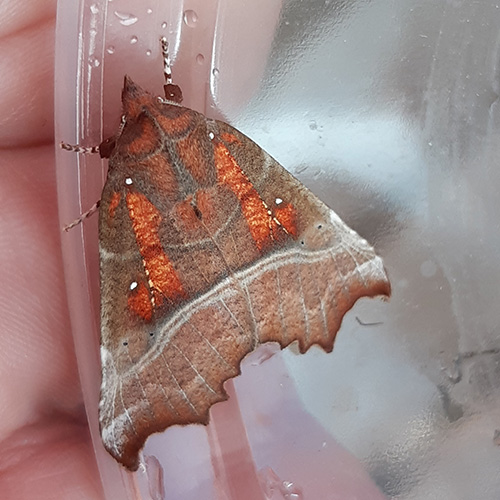
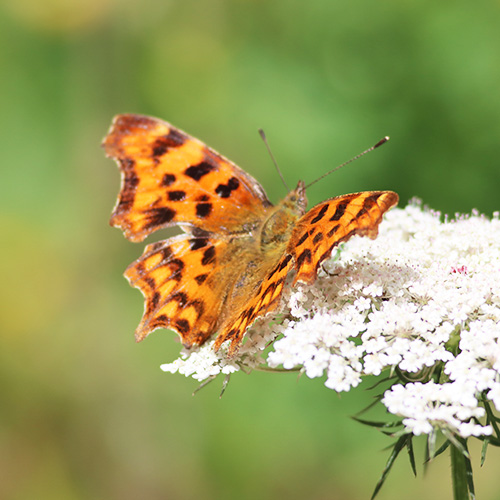
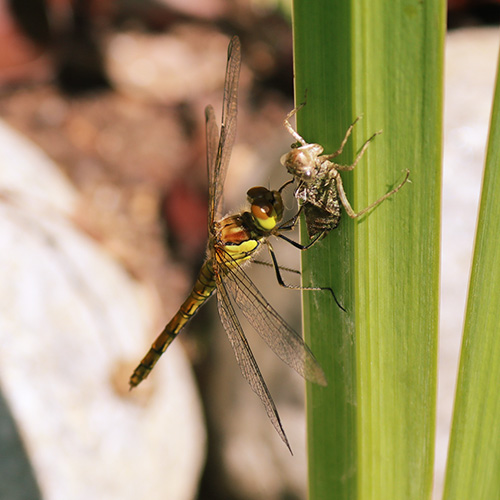
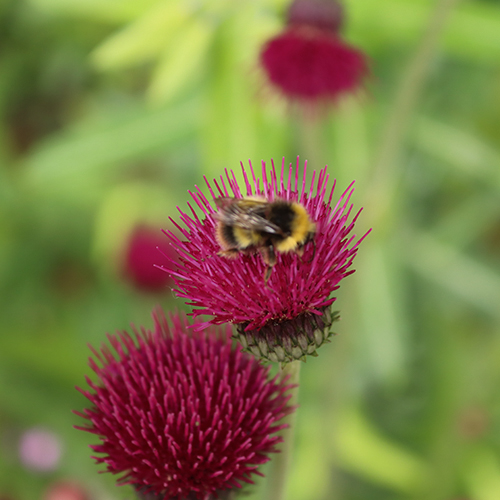
Over one summer our client photographed several butterfly species in it – including Small Tortoiseshell, Red Admiral, Comma and Gatekeeper — along with a Privet Hawk-moth (an unusual visitor to a small town garden), Mint Moth, Herald Moth and plenty of dragonflies. And it looks like a proper, designed garden rather than a nature reserve that got out of hand.
Plants that provide most value
One of the things I find most satisfying about naturalistic planting is the size of the overlap between beautiful garden plants and ecologically valuable ones – and it tends to be bigger than people expect.
Echinacea purpurea is a designer staple – strong upright form, long season and good seedheads through winter. Bees and butterflies cover it from July onwards. Verbena bonariensis threads through a border with its airy, tall stems and tiny purple flowers, and pollinators treat it as essential.
Salvia nemorosa, Geranium psilostemon, Persicaria amplexicaulis – these plants feature in our schemes because they look right and behave well. The plants that work in a well-designed scheme and the ones that support insect life turn out to be, by and large, the same plants.
Our drought-tolerant planting guide covers many of these species in detail, with real examples of how they perform in a UK garden over several seasons.
Habitat features – what’s worth having
Bug hotels can look attractive, and if you like the idea, they’re a reasonable addition to a border. As ecological features go, though, they’re fairly limited – most are too exposed and too shallow to support much beyond a few solitary bees.
A small pond is the single most effective thing a residential garden can do for biodiversity. It supports amphibians, drinking birds, dragonflies, hoverflies and a range of invertebrates. In our Rickmansworth garden, the pond was the ecological centrepiece, and the species count reflects that.
A log pile, if you have the space, costs you nothing and delivers a perfect habitat for beetles, hedgehogs and invertebrates. Position it somewhere semi-shaded and leave it alone.
Multi-stem trees are a good choice for any garden of reasonable size. A multi-stem birch or crab apple provides canopy, seasonal interest, berries or catkins for birds, and habitat in its bark and structure. It also looks superb and provides you some privacy screening.
And even ivy and a patch of stinging nettles – not regulars in our designs – are ideal for insects to use as food or for laying their eggs.
For a fuller look at materials and habitat thinking, our environmentally friendly garden article covers these in more depth.
What managing a wildlife garden involves
“Low maintenance” is a phrase that gets attached to wildlife planting rather too freely. Naturalistic planting is lower maintenance than a traditional annual border – but it isn’t hands-off either.
Most naturalistic schemes are cut back once a year, typically in late February or early March, before the new season’s growth begins. The seedheads and structure that look good through autumn and winter are left standing deliberately – they provide habitat and winter food for birds. One annual clear-down replaces the constant deadheading and tidying of a more traditional approach. That’s less work, but the timing still matters. Miss the cut-back and the planting will lose its definition as the garden gets congested.
The low-maintenance garden design principles we follow for other projects apply here too. The difference is in how you think about the season – you’re managing for year-round interest and ecology, not just a flower show in the summer.
A wildlife-rich garden can be a beautiful one. What it needs is a design that’s structured enough to hold the naturalistic planting together – and a willingness to let ecology and aesthetics work in the same direction rather than against each other.
If you’re planning a redesign and want to talk through how wildlife thinking might work within it, get in touch below – we’d be glad to hear about your garden.